There was a time when using a big-name cloud provider felt like the safest bet. AWS had your back. Google Drive sync’ed across all your devices. Gmail was basically the gold standard. We all jumped in – some out of convenience, others out of curiosity. I was right there with the rest of you.
But the game has changed. And if you’re still treating cloud services like neutral infrastructure, it might be time to take a step back and ask: “Who really owns my data – and what could they do with it if the political winds shift?”
This isn’t just about data centers or service outages. It’s about trust. And more importantly, about jurisdiction. Because no matter how advanced your encryption or how solid your app security is, if your data lives in a legal zone where political chaos or surveillance agendas are the norm, it can be exploited in ways you might not expect.
Let me unpack why I’ve started migrating my personal and professional data away from US-based cloud services – and why you might want to do the same.
The Myth of Neutral Infrastructure
We’ve been sold this idea that the internet is borderless. A magical, distributed space where data just flows from node to node, untethered to the grubby business of governments and geopolitics. And while that’s a nice vision, it doesn’t reflect the infrastructure we actually rely on today.
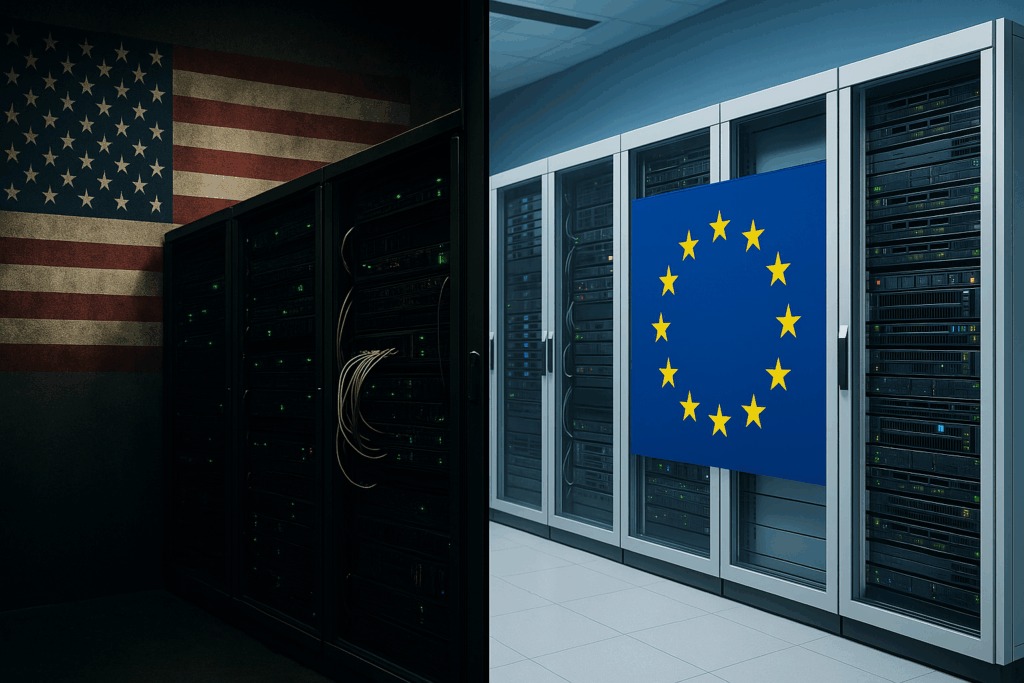
Take Amazon Web Services. It’s the backbone of a huge chunk of the internet – hosting websites, databases, APIs, surveillance systems, and even critical public infrastructure. But it’s still a US company. That means it falls under the umbrella of laws like the CLOUD Act, which gives US law enforcement access to data stored by US companies, even if the physical servers are outside the US. The same applies to Google, Microsoft, and just about every big-name cloud provider headquartered in the States.
So when people say, “I store my data in the EU region of Google Cloud, so I’m protected by GDPR,” I can’t help but cringe a little. Because jurisdiction isn’t about the data center location – it’s about who controls the company that owns the servers.
Surveillance Is No Longer Subtle
Remember when we used to worry about the NSA reading our emails? That was almost quaint compared to what we’re seeing now. The problem isn’t just government surveillance – it’s how surveillance powers are becoming normalized, politicized, and weaponized in real-time.
In the US, debates over encryption, backdoors, and “lawful access” are no longer hypothetical. They’re policy goals. In China, the state doesn’t even pretend there’s a separation between tech companies and national interests – hardware manufacturers are deeply embedded in the surveillance apparatus.
I don’t mean to paint with too broad a brush here. Not every router is a spy device. But if your home network relies entirely on cheap imports from regions with… let’s say “aggressive data collection practices,” are you really in control of what leaves your network?
And that’s the thing. When geopolitics and tech collide, we – the users – end up as the collateral damage.
Data Gravity Is Real
Once you put your data into a platform, it becomes harder and harder to pull it back out. You integrate your files with your calendar, your calendar with your mail, your mail with your identity. Before long, moving away from that platform feels like disassembling your life.
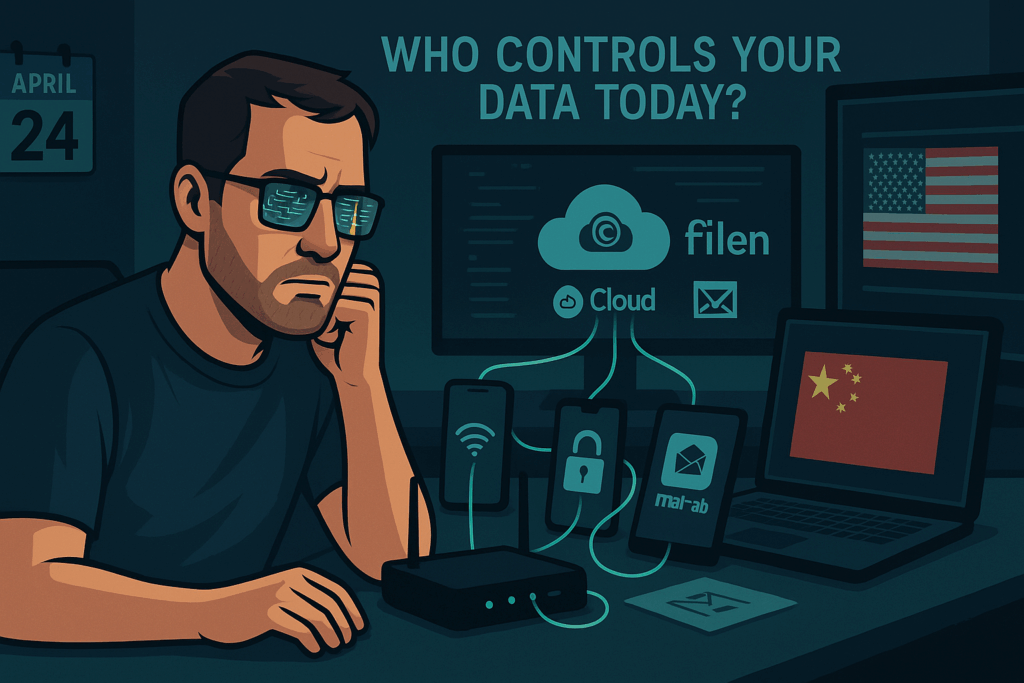
I get it. That’s why I didn’t make the switch overnight either. But over the past few years, I’ve moved my email to a self-hosted Mail-in-a-Box setup, my files to pCloud and Filen.io, and I’m actively reducing how much I rely on Google Docs, Drive, and Gmail.
It’s not just a technical migration. It’s a mindset shift – away from the convenience of global giants, and toward local control and legal safety.
And let me tell you, it feels good to know that when I send an email or store a file, it’s not immediately subject to the whims of a government I can’t vote for.
What About Hardware?
Let’s take a moment to talk about the elephant in the server room – our devices. Phones, routers, TVs, switches, NAS boxes. Most of them are built by a small handful of manufacturers in the US, China, or Taiwan. And while I’m not suggesting we throw out our smartphones and become off-grid hermits, we should at least understand the risks.
Firmware-level exploits, remote access backdoors, and forced updates aren’t conspiracy theories anymore – they’re documented strategies in cyberwarfare. When countries sanction each other, companies get blocked from shipping updates. Chips get banned. Remote access tools get turned into national security weapons.
And what’s the average user supposed to do about it? The only answer is to diversify – to stop putting all your eggs in one geopolitical basket. Try using routers from companies that publish open firmware. Avoid devices that “phone home” constantly. Don’t blindly trust the glowing reviews on Amazon or the sales pitch from your ISP.
Europe Is Waking Up – Finally!
It’s easy to criticize the EU for being slow or bureaucratic, but I’ll give them this: when it comes to data protection, they’re at least trying. GDPR might be annoying at times, but it represents a fundamentally different approach to privacy – one that treats user data as a right, not a commodity.
That shift is creating a healthier ecosystem of local alternatives. Services like Tutanota and ProtonMail offer secure email with strong privacy guarantees and EU hosting. Nextcloud is giving businesses and individuals the tools to run their own cloud platforms. pCloud and Filen.io are proving that fast, reliable storage doesn’t have to come from California.
And hosting providers like Hetzner and Scaleway offer powerful cloud infrastructure rooted in European law – not just European geography.
This matters. Because when you host your services in a country where privacy is seen as a cultural value rather than a marketing tactic, you’re building on a more trustworthy foundation.
Streaming, Subscriptions, and the Quiet Data Leak
Let’s not forget how much metadata we generate just by existing in the digital world. Every show you stream, every song you skip, every device you plug in – it all feeds into behavioral profiles. And most of that data flows straight into the hands of a few American giants.
I’ve started switching to alternatives. Using Jellyfin for self-hosted streaming. Listening to music via local files or indie platforms. Avoiding “smart TVs” altogether in favor of HDMI sticks I control.
I’m not paranoid. I’m just tired of being constantly profiled, targeted, and monetized. If someone wants to sell me something, they can do it the old-fashioned way – by offering a product I actually want.
This Isn’t About Nationalism – It’s About Resilience
Let me be clear: I’m not waving a flag for the EU, or trying to dunk on America. I’ve lived in the tech industry long enough to know that every country has its own messes. But when it comes to data, the stakes are getting higher – and the old assumptions no longer hold.
Building resilience means diversifying your dependencies. Using tech that reflects your values. Hosting your services in jurisdictions you understand and trust. Supporting companies that don’t answer to intelligence agencies with secret courts.
It also means accepting a bit more complexity. Maybe a slightly less polished interface. A few more setup steps. But honestly? That’s a small price to pay for actual control.
What’s the Endgame Here?
I don’t think we’ll ever live in a world without big cloud providers. But I do think we can rebalance the scales. Start treating data locality, legal jurisdiction, and hardware sovereignty as critical parts of cybersecurity – not afterthoughts.
If you’re still storing everything in Google Drive, depending on Alexa for your reminders, and watching the world burn while your NAS sits in passive silence, maybe it’s time to reconsider where your digital life actually lives.
Because in a world where geopolitics shapes technology, sovereignty starts at home.
And maybe – just maybe – it starts with your next login.