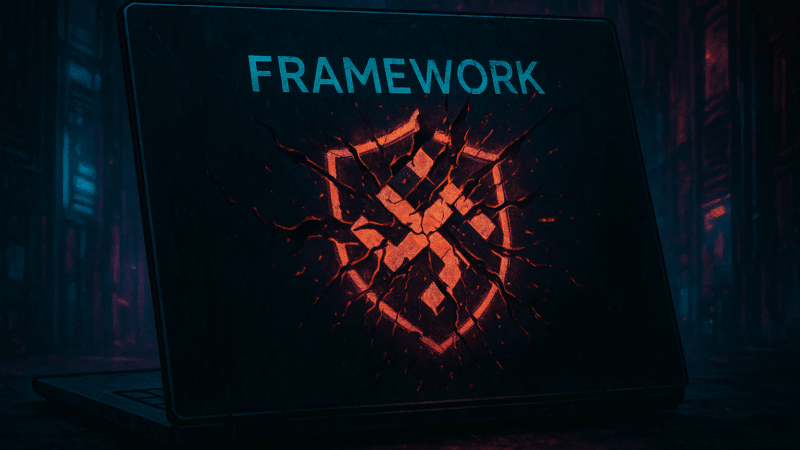
I’ve been a fan of Framework laptops for a while, and have been an open source advocate for almost 3 decades. It seems like the perfect match. The idea of a laptop you can repair, upgrade, and customise? Heck yes – especially in a world where the alternative too often is a sealed box you’re locked into for three years until it becomes e-waste. So when I watched the news about Framework’s sponsorship and promotion of the Omarchy project (by David Heinemeier Hansson, aka DHH) and its association with far-right views, I found myself torn. On one hand: cool hardware, nerdy goodness. On the other hand, the ethics of whom you island-hop with matter.
Here’s how I see it, what the risk is, and why Framework’s “big tent” line doesn’t exactly satisfy the kind of community I want to be part of.
What’s going on?
- Framework publicly announced sponsorship (or at least enthusiastic promotion) of several open-source software projects, including Omarchy. (It’s FOSS News)
- Omarchy is the Linux-distribution project of DHH, who remains a high-profile figure: creator of Ruby on Rails, racing driver, CTO/partner at 37signals. (Wikipedia)
- The controversy isn’t just “hey, another distro launch” – many in the community point to DHH’s political commentary (for example, on mass immigration, demographic change, cultural cohesion) as being outside what they consider acceptable, or at least highly problematic. (jakelazaroff.com)
- Users in the Framework forums (and elsewhere) are pushing back: if you buy a Framework laptop, some say, you might effectively be underwriting projects or people whose stated views you find objectionable. (Framework Community)
- Framework’s response: they say they’re “software-first” and want to adopt a “big tent” approach in open source – they claim not to partner based on beliefs or politics, but on the value of the software for their ecosystem. (theregister.com)
Why this matters (and why I care)
- Brand-ethics mismatch – When you buy from a company that markets itself as “progressive” (repairable laptops! open source friendly! sustainability! community!) you expect some alignment between product promise and ethical behaviour. If it turns out the company is backing projects or figures that many in that community find toxic, it undermines trust.
- Money talks – Whether the money is large or small, sponsorship, promotion, or endorsement implies a level of legitimacy and alignment. Framework might say “we’re just backing software,” but externally it looks like “we endorse the people building this software.” Many will draw that conclusion.
- Open source isn’t neutral – There is a myth that software, free/open source projects are purely technical, divorced from politics. That myth is wearing thin. The people who build and steer projects may bring ideologies, communities may exclude, and moderation may vary. As one commentary put it:
“Omarchy is a reminder that we live in a world where software isn’t just software, but the people who make it.” (tedium.co)
If we accept that, then companies embedded in that ecosystem arguably have a moral choice about which communities they prop up.
- Community health – If the community around your hardware and software becomes polarised, toxic, or closed off to people who don’t share certain viewpoints, you risk alienating the broad base of users. Framework’s community thread is evidence that many feel unsafe or uncomfortable with the direction. (theregister.com)
So what’s wrong with “Big tent”?
Framework says: we don’t base sponsorship on beliefs, we just back software; we want everyone in the tent.
That sounds good on the surface. But:
- A tent only works if the people inside agree on some basic rules of respect and not harming others. One forum user put it plainly:
“The big tent argument works fine if everyone plays by some basic civil rules of understanding… A big tent won’t work if you let in people that want to exterminate the others.” (Framework Community)
- The “big tent” line risks being used as a shield for any ideology, even ones that are deeply exclusionary, simply by hiding behind “we don’t discriminate based on political belief”.
- It places the moral burden entirely on the individual user (“you disagree? Don’t buy”) rather than on the company to make principled decisions about their partnerships.
In short: “open source first” is fine – but which open source, which contributors, which communities? Matter.
What I’d like to see Framework do
Here are some thoughts (and yes, nails here). Because I’m still rooting for the modular-laptop dream – I just don’t want ignorance or ethics-amnesia to spoil it.
- Publish clearer criteria for sponsorship/partner-selection, including community-health indicators (moderation policies, inclusive atmosphere, documented behaviour of lead contributors).
- Provide transparency: which organisations/projects receive financial support, how much, and what the expectations are. Framework has begun to publish a list, but the “why” still feels thin. (Framework Community)
- Allow for revocation or review: if a project’s community becomes toxic or a lead switches to promoting exclusionary politics, the sponsorship should be reconsidered.
- Engage the community in governance: let users say “yes/no” or at least “we’re uneasy” before long-term alignment with controversial figures.
- Uphold the brand’s promise: repairable, open, inclusive hardware should be matched by inclusive, respectful software and community practices.
My verdict (and what you, dear reader, should think about)
I’m not calling for a boycott (yet). I genuinely like what Framework does. But I am saying: people who care about community, ethics, and inclusiveness ought to ask hard questions before buying. Because your purchase is never just hardware – it’s also a vote for the values of the company behind it.
If Framework keeps backing players like DHH/Omarchy without addressing the concerns, then what looked like a win for modular/repairable laptops begins to look like a brand with a value mismatch. When that happens, yes! I’d consider looking elsewhere.
For you: if you’re in the market for a modular laptop, check not just the specs and the sustainability, but also the values of who’s being sponsored alongside the brand. Because one day you might find that your upgradeable laptop was built for a tent whose occupants you didn’t choose.
PS: yes, it is on purpose that I do not give Omarchy any link-love in this post.